KRISTINE LOCKER OF LOCKER
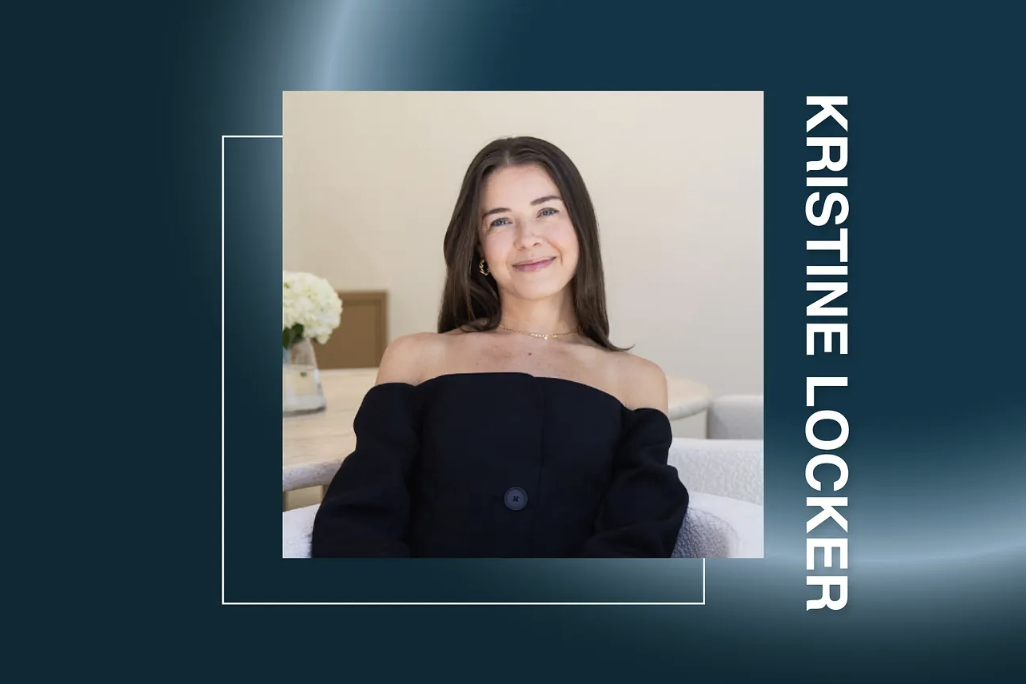
Kristine Locker is the founder and CEO of Locker, a social shopping and curation platform known for redefining the digital retail experience through a community-driven and visual approach. Since launching the company, Kristine has led Locker’s expansion by challenging the fragmented nature of traditional e-commerce and building a platform that empowers the "everyday consumer" to socialize their shopping habits. Her leadership combines a strong financial background from Goldman Sachs with strategic innovation, positioning Locker as a pioneer in the intersection of fashion and technology.
Main Questions:
Tell us about yourself and what Locker is.
My name’s Kristine. I am 33, based in LA, and I’m the founder of a shopping platform called Locker —a name that, yes, happens to be my actual last name! I often get asked if I changed it for the business, but it was mine first.
The easiest way to describe Locker is “Pinterest for online shopping”. I wanted to create a world where the everyday consumer could curate everything they love or are thinking about buying and share those finds with friends and family. It’s about taking what has become an isolated experience—online shopping—and making it social and fun.
The idea originally came to me because I am obsessed with shopping online, and I’m a very type-A person. To stay organized, I would create a Google spreadsheet full of product links or take hundreds of phone screenshots. Both of these methods are fragmented; you never think to go back to them, and they aren’t visual. In creating Locker, I wanted a highly visual experience that made it exciting to revisit your “lives” so you never forget about the things you were thinking of buying.
You began your career at Goldman Sachs. What made you decide to pivot and found your own company? Was there a specific "spark"?
I started my career at Goldman Sachs doing debt and structured finance on their real estate team, and later became a commercial real estate broker. I eventually left my job entirely to start Locker. I’d had this idea for a while, but one day I was in the office, and I saw that Instagram had launched shopping. That was my catalyst. I realized if I was going to start this company, I had to do it immediately. So the next day, I didn’t go back to work; I was determined to start Locker. That was in 2020.
Are there any skills from working as a Real Estate Analyst that you’ve been able to transfer to entrepreneurship?
It was initially scary because you move from a structured environment where you have a boss telling you what to do, to starting a company where everything—from your schedule to your trajectory—falls on you.
The first thing I did was Google "how to start a company." I didn’t know where to begin—whether I needed to talk to legal to set up an entity first or just start with a business plan. Since Locker is a tech company and I don’t have a technical background, I also had to figure out how to go out and find technical talent to bring the idea to life.
Locker was recently valued at $9 Million. What did your fundraising journey look like, and what is your advice for those struggling with it??
Luckily, I had a very strong financial background thanks to Goldman, which has carried me through. I am very ROI driven. We’ve raised relatively little money, and we have spent a small amount of what we raised because I think critically about every dollar that goes out. I’m always figuring out how we’re going to bring that dollar back into the company.
I’ve been strategic about how much I’ve given away in exchange for equity. Many founders raise millions with the hope of one day becoming profitable, but Locker actually turned a profit for the first time in 2023. That’s very early for a startup. Because we’ve maintained profitability, I’ve been able to take in less capital and continue to own the majority of the business. On a day-to-day basis, I might not use Goldman skills for creativity or product, but the financial discipline has been vital.
You were named Forbes Next 1000 under 30 years old, an amazing feature as an entrepreneur. How was your experience approaching the entrepreneurial field at such a young age, and how were you able to navigate uncertainties or challenges as a young entrepreneur?
I actually think being a young founder was helpful. I was naive when I first started, and that played to my advantage because I was able to take “one bite of the elephant at a time.” I didn’t truly know how hard fundraising or finding an engineer would be. Being young and hungry gave me the energy to burn the candle at both ends. I worked—and still work—very hard, though things have shifted now that I have a baby.
Perception-wise, the startup world is very receptive to young entrepreneurs; I never felt like people thought I was “too young.” Most of the hesitancy I faced from investors came from being a first-time founder and a solo founder without a technical co-founder building a tech business. That was a bigger hurdle than my age.
A big part of Locker’s mission is to cultivate community. How have you built a community beyond being online into genuine connections?
I think the most important piece is authenticity. From day one, whether it’s our social media presence or how we build the product, it’s all about showing up as real consumers. I was building a product for people experiencing the same problems I was, so the “pitch” to users was simple: “Come use this tool I built for myself that I think will help you, too.”
Many shopping products are built by men who don’t share our shopping behaviors. Our mission is to serve the everyday consumer—not just the influencer. To strengthen that, we brought the community offline with Locker Walking Clubs and Cooking Clubs in LA, New York, Austin, and Dallas. We also have a college ambassador program where girls become friends by connecting online. Cultivating an in-real-life community for an online platform is essential to us.
Locker emphasizes its target audience as the ‘Everyday Consumer’ and allows this audience to earn commission for providing recommendations to other buyers without an ‘influencer’ status. How do you define the ‘Everyday Consumer,’ and why provide this “payback” element in your product, especially in an age of business built around influencer marketing and media following?
That came from being an everyday consumer myself. We are all “influencers” in our own worlds. If a friend asks where you got a sweater and you send them the link, you’ve influenced a sale, but you usually aren’t rewarded for it because brands can’t manage those small, intimate interactions.
Locker’s Payback program rewards those small moments between friends. We built a unique, non-toxic model: if you recommend a sweater to me and I buy it, we both get an equal amount of money if we’re both in the program. You get rewarded for sharing, and I get rewarded for buying. It removes the “icky” feeling of being sold to because everyone wins. We wanted to carve out our own niche rather than doing what every other platform is doing.
What are some core values that you take pride in every day while growing Locker into what it is now?
Probably the number one thing is hard work. Coming from Goldman, I value putting my head down and grinding to build the best product possible. I think that’s what we’ve done as a team to create Locker and have it come to life for our users.
Second, the user always comes first. If we make a mistake on our side and let’s say you didn’t get your cash back for a purchase, it’s about figuring out what happened in that transaction. How can we do better? And making sure that you still get the money that you’re due and us eating that cost.
At Locker, I really value loyalty. Whether that’s between a brand partner and us and fulfilling a commitment, even if something falls through or changes, that matters a lot in the affiliate space. How we make money is very relationship-driven, and so maintaining those relationships and how you treat them is important. Loyalty to our brand partners and to our users matters a lot to us.
How has your vision for Locker evolved over the years as you have engaged with more users? Were there any key moments that shifted your own outlook on your brand?
We started with a Chrome extension because it was the most cost-effective way to create a proof of concept. As a millennial, I’m a desktop shopper, but I knew we eventually needed an app. I had to raise money to hire a full-time engineer for that, which finally came to life in 2023.
My vision is that consumers are never just “phone shoppers” or “desktop shoppers”—we need to serve them however they show up. Whether you’re waiting for a paycheck, waiting for a Price Drop (one of our core features), or just need a “safekeeping place” for an item you aren’t ready to buy yet, we want to support the entire journey from discovery to purchase.
What advice would you give to women who want to work at the intersection of fashion and technology? What do you think distinguishes this field from other entrepreneurial avenues?
First, distinguish between wanting to be a founder and joining an existing cool company. If you want to start your own, do your research to ensure it doesn’t already exist. Most importantly, build from the perspective of yourself as a consumer. As women, building solutions to solve other women’s problems is incredibly impactful. We often have the cards stacked against us in fundraising and building, so you have to be resilient. You will frequently find yourself challenging the status quo and facing obstacles that others might not, but staying the course makes the eventual success that much more fulfilling.
Quick Takes:
Who is a female founder you admire?
Melanie Perkins, who is the CEO and founder of Canva. When first pitching the company idea, she got over 100 “No’s” and now the company is worth 42 billion dollars.
What is your favorite thing about being a founder?
I love building a product that impacts other people’s lives, so building something that you use and telling me that you use it, or somebody reaching out to me to tell me that Locker has changed their life – all of that makes me feel so fulfilled.
A current fashion trend you love? A current fashion trend you just can’t get behind?
Jelly sandals. If skinny jeans come back, I will not adopt that.
Your brand in one word?
Authentic.
Your favorite fashion era?
I’m always a fan of the current fashion era.