KRISTEN KELLY & JEN SAARBACH OF WALL STREET SKINNY
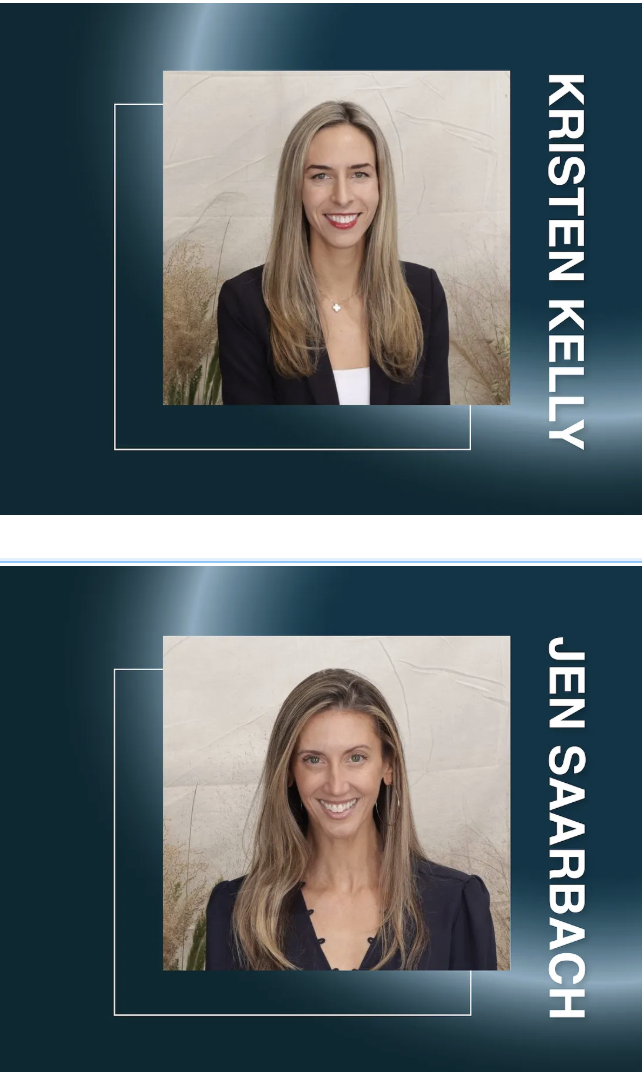
A Conversation with Jen & Kristen of Wall Street Skinny
Hi everyone! I’m Jen Saarbach, and I graduated from Princeton in 2006. I spent nearly a decade on Wall Street as an interest rate derivatives specialist at Lehman Brothers, Barclays Capital, and Morgan Stanley. After formally exiting the industry, I realized there wasn’t a single place where I could keep learning—not just about finance, but about myself and the broader world around me.
Kristen and I started talking, and we realized our conversations were filling a void. That’s how Wall Street Skinny was born: a one-stop place to learn about everything finance—IB, PE, private credit, hedge funds, S&T, fixed income, asset management—but in a way that feels like watching a TV show or scrolling through social media.
Kristen: Funny enough, I got into finance because of Jen. I grew up wanting to be a scientist, studying biomedical and mechanical engineering at Brown. But during my junior year, I visited Jen in NYC while she was interning at Morgan Stanley, and I was hooked. She was learning so much, meeting incredible people, running around the city, and working on amazing deals. That seemed way more fun than my cadaver lab internship. So I pivoted, worked hard, and eventually made it to Wall Street.
Main Questions
Each of you arrived on Wall Street through a different path. How have your personal experiences and obstacles—whether navigating first promotions, office politics, or burnout—shaped the themes and advice you prioritize on WSS?
Jen: Everyone starts their career at a time that feels unprecedented. I started at Lehman Brothers in 2006, just before the firm collapsed. My summer internship was… honestly, terrible. I had no idea what to do, no idea what was expected, and I constantly felt like I was failing. Back then, internships were basically “your offer to lose,” and mine felt like a very clear message that I wasn’t quite measuring up.
But here’s the thing—I learned more from that experience than I could have from any success. It forced me to reflect on what I actually wanted: I wanted responsibility, I wanted to feel like I was contributing, I wanted mentorship, and I wanted to be challenged. It also taught me what I didn’t want: a role where I was sitting behind a desk alone, twiddling my thumbs, or feeling invisible. That clarity shaped every decision I made after that—every desk I chose, every project I took on. And eventually, it even gave me the courage to walk away from finance when I realized I wasn’t learning or growing anymore.
I think that’s the lesson I try to pass on with WSS: your path won’t be perfect, mistakes are inevitable, but if you pay attention to what excites you and aligns with your strengths, you can make intentional choices instead of blindly following prestige or pressure.
Kristen: For me, the lesson was slightly different. I loved finance, but I realized early on that my skills didn’t fully align with certain roles. I started in sales & trading influenced by Jen, but I ended up on the CDO (Collateralized Debt Obligations) desk—the very desk that helped bring down the world economy. It was chaotic, high-stakes, and detail-oriented in a way I just wasn’t wired for.
I’m creative, I think quickly on my feet, I love storytelling and teaching, but I don’t have the obsessive attention to detail that’s critical when billions of dollars are on the line. So I pivoted toward teaching and education, which allowed me to leverage my strengths while still staying close to finance.
What I tell young professionals is: don’t chase what looks “sexy” or prestigious. Understand your own skills and figure out where you’ll thrive. Ambition isn’t about doing what everyone else wants; it’s about doing what you’re actually good at—and what energizes you.
Running WSS requires balancing content creation, entrepreneurship, community management, and constant upskilling. What has been the hardest part of scaling the platform, and what have you learned about yourselves as leaders in the process?
Jen: If you ran a Columbia Business School study on Wall Street Skinny, we would look like the worst-case scenario. There’s no automation, no efficiency, no scale—it’s just Kristen, me, and one part-time helper. Everything is analogue, painstakingly manual, and by design.
I’ve learned that building something you care about means doing it yourself and doing it well. No one is going to save you. We are both the CEOs and the janitors of our company. We know every brick of this business because we built it ourselves—and that’s invaluable.
Having a partner you trust completely is also essential. You need someone who will have your back, challenge you when necessary, and share the weight of the grind. I honestly don’t think we would have lasted this long or created the kind of community we have without that mutual trust.
Kristen: You also don’t realize how much you have to learn when you start your own business. From Canva to YouTube to editing software, we had to figure it all out ourselves. And even when we tried outsourcing, it sometimes caused more headaches than it solved. Doing it ourselves—even when it was exhausting—made us better at every part of the platform.
The biggest lesson: don’t rush, don’t expect to do everything perfectly, and don’t underestimate the power of perseverance. Step by step, brick by brick, you’ll get there.
You’re educating a massive audience. How do you balance simplifying complex ideas with maintaining accuracy?
Kristen: Our audience is extremely diverse. Some are finance professionals who understand the jargon and mechanics, while others are complete beginners. Balancing those perspectives is tricky—you have to know who you’re talking to and adjust accordingly.
Jen: Kristen and I also act as each other’s built-in fact-checkers. We specialize in different areas of finance, so if I put something out and she doesn’t fully follow, we know we’ve gone too far too fast. Then we go back, translate it, and make sure it’s accurate and digestible.
Jen (continued): When we bring on external guests, we don’t just ask questions and move on. We have real conversations, learn in real-time, and then use that knowledge to educate both ourselves and our audience. We think of the podcast as a curriculum: the stories teach concepts, and listeners can then apply them through self-study or practical exercises. The goal isn’t to turn someone into an expert overnight—it’s to make learning engaging, incremental, and accurate.
What is the biggest myth young professionals still believe about breaking into finance? What do you wish someone had told you about ambition, self-doubt, or “belonging” in the industry?
Jen: One of the biggest myths is that your major dictates your future in finance. It doesn’t. Some of the people controlling the most capital on Wall Street never studied finance—they learned through apprenticeship, curiosity, and critical thinking. What matters more than your major is your ability to think critically, communicate clearly, and demonstrate a genuine drive to learn. Those qualities will take you farther than memorizing financial formulas ever will.
Kristen: Another misconception is the overemphasis on certifications like the CFA or even an MBA. They can help in certain contexts, but they’re not magic tickets into the industry. If you want to enter investment banking right after college, they’re not necessary. The key is being curious, learning continuously, and showing that you can think critically and apply knowledge. Confidence and the ability to ask questions matter more than a piece of paper.